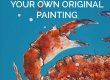
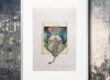
“I suspect I’m unconventional as a painter, but I crave the happy accident that comes from losing control over an image. Despite going to art school I think creativity is all about experimentation and finding your own way. So, from the board I paint on, to how I mix my paint, to how I frame the final piece, I’m sure I often go against accepted methodology. That, to me, only makes a piece more individual.
“There’s always a structure to the piece I’m working on, of course. I will have a ‘loose’ design in my head, but I don’t want to be too prescriptive about it. I need to leave room for the surprise. So, I’ll work initially to ensure a sense of realism through the proportions, but the most exciting part is the letting go and allowing the paint to do the work as much as possible. I’ll build up in layers. Acrylics first, because they dry the fastest, to let me get the basic form. Then I play mainly with oils. This could take days or weeks as they slowly dry and reveal intriguing textures and patterns. They are my favourite to work with as they sit on the surface allowing you to play with them for days. I’m not precious about adding anything that will give the surface form. I might add a layer of varnish early in the process or drip water-based colour on top of it to see the alchemy that occurs as the water fights with the oil. I love the happy accident. I enjoy the surprises that can happen when you start mixing varnishes, car paint, inks and model paint. Texture is very important in my painting – it gives an image another dimension.”
“Over-working or under-working a piece is a challenge for all painters. Knowing when a work is finished is a fine balance: Stop too early, fearful of ruining an effect, can compromise a piece, continuing too long can under-mine the spontaneity. I can often be surprised to realise a painting is ‘finished’ early and then on occasions I may have to go over a piece time and again until it comes together.”